Digital Wedding Invitation Card: Modern Designs, Benefits & Ideas
There's a reason almost every couple getting married in India today at least considers a digital wedding invitation card, even if they end up printing p...
There's a reason almost every couple getting married in India today at least considers a digital wedding invitation card, even if they end up printing physical ones as well. The convenience, cost savings, and creative freedom it offers simply weren't available a decade ago, and Indian couples have embraced it faster than almost anywhere else in the world.
There's a reason almost every couple getting married in India today at least considers a digital wedding invitation card, even if they end up printing physical ones as well. The convenience, cost savings, and creative freedom it offers simply weren't available a decade ago, and Indian couples have embraced it faster than almost anywhere else in the world.
What Makes a Digital Wedding Invitation Card Different
Unlike a traditional printed card, a digital wedding invitation card is designed specifically to be viewed on a screen — a phone, laptop, or tablet. This changes several design considerations: text needs to be legible at small sizes, colors need to display well on varying screen brightness levels, and file sizes need to stay small enough for quick sharing over WhatsApp without lag.
It typically exists as a high-resolution image or PDF, sometimes accompanied by a short animated video version for social media sharing.
The Real Benefits Beyond Just Convenience
Instant, unlimited reach is the most obvious benefit — the same card reaches a hundred guests as easily as it reaches a thousand, at zero additional cost. This matters enormously for Indian weddings, where guest lists routinely run into the hundreds given the size of extended families.
Easy last-minute edits are another underrated advantage. If a venue changes or a date shifts — which happens more often than couples expect — a digital card can be corrected and resent within minutes, compared to reprinting and redistributing physical cards, which is often simply not feasible on short notice.
Better tracking and organization comes with digital sharing too. You can organize your guest list into groups — family, friends, colleagues — and personalize the sharing message for each group, something impossible with a single printed design mailed out uniformly.
Environmental responsibility is increasingly a genuine consideration for younger couples, who are conscious of the paper waste generated by traditional wedding cards, most of which are discarded within days of the event.
Modern Design Trends for Digital Wedding Cards
Indian couples in 2026 are gravitating toward a few clear design directions. Bold, jewel-toned color palettes — emerald green, royal blue, deep maroon — paired with gold or foil-effect text continue to dominate for traditional weddings. Soft pastel palettes with muted pinks, sage greens, and creams are gaining ground for daytime or garden-style weddings.
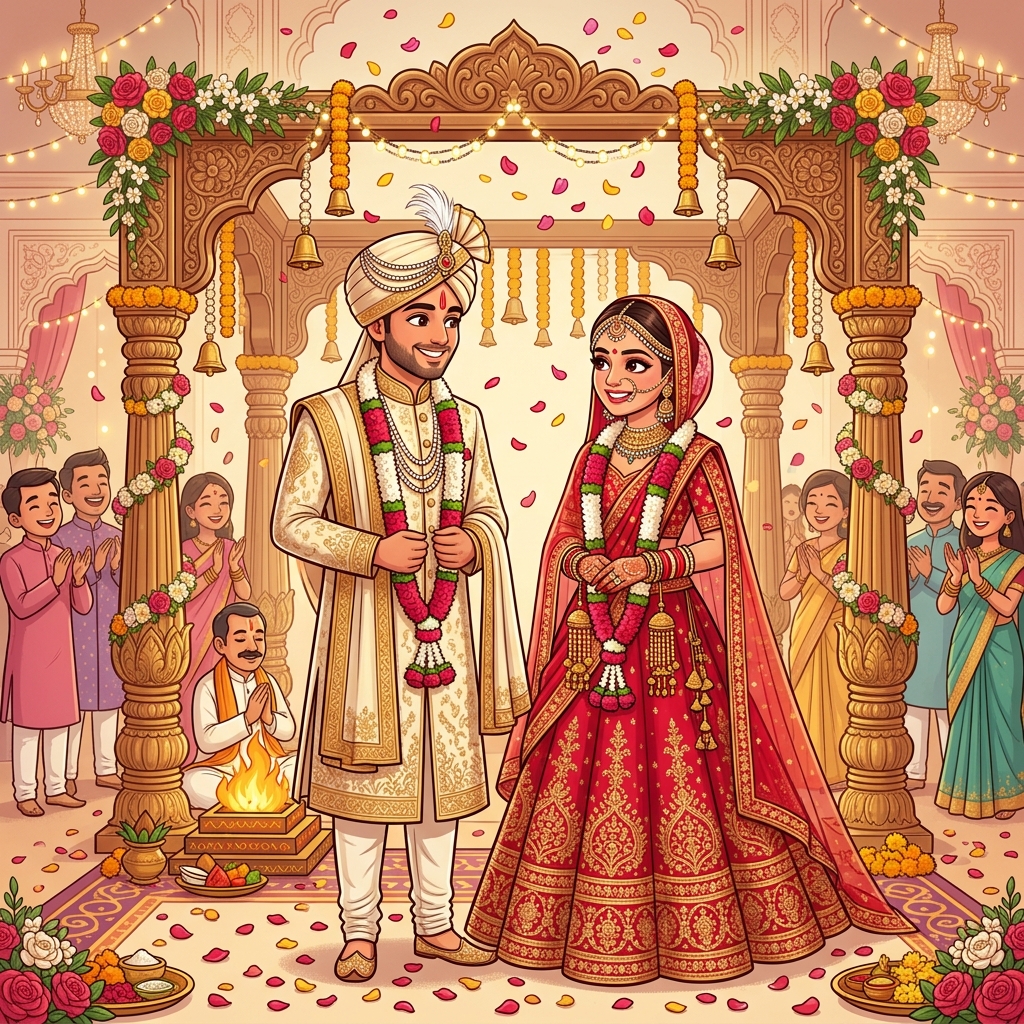
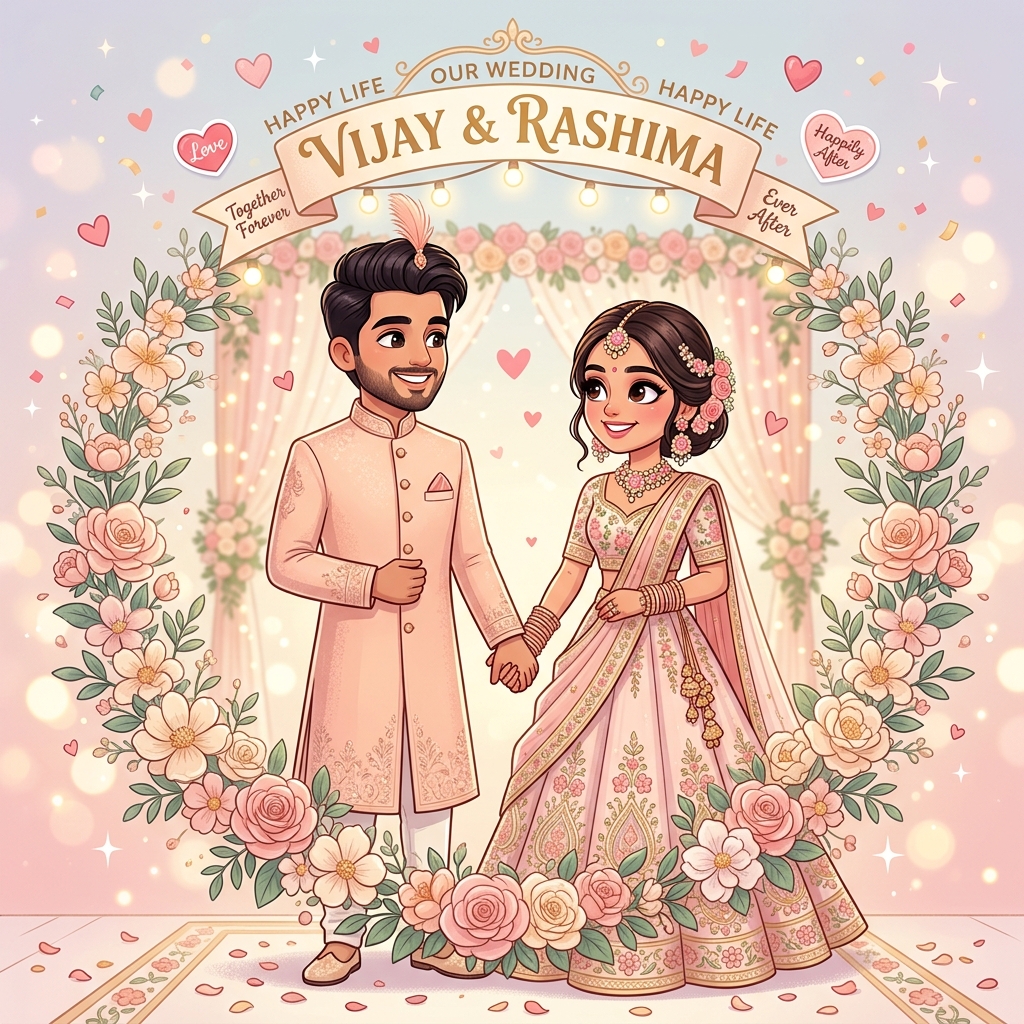
Personalized illustrations of the couple, whether hand-drawn, AI-generated, or created by a professional illustrator, add a distinctive touch that a generic floral template can't replicate. Multi-panel designs, where guests can scroll or swipe through separate panels for each event — mehendi, haldi, sangeet, wedding — are also increasingly popular, since they organize information clearly without overcrowding a single card.
Ideas for Making Your Digital Card Stand Out
Consider adding a short personal note alongside the formal invitation text, something warm and specific to your relationship rather than purely formal wording. If your families have specific traditions or symbols — a particular deity, a family crest, a meaningful flower — incorporating that detail makes the invitation feel less generic and more authentically yours.
For couples with guests across different regions or age groups, creating a bilingual card, with details in both English and your regional language, ensures older relatives who may be more comfortable reading Hindi, Marathi, Tamil, or another regional language feel equally included.
Practical Details to Never Skip
However beautiful the design, a digital wedding invitation card still needs to function as a clear, practical communication tool. Always include the complete venue address along with a Google Maps link, since guests unfamiliar with the area will rely entirely on this. Mention parking availability if relevant, especially for venues in crowded city areas. Include a contact number for RSVP queries or last-minute questions, ideally someone other than the couple themselves, who tend to be busy with wedding preparations closer to the date.
Designing It Yourself vs Getting Professional Help
For couples on a tighter budget or timeline, tools like Canva offer excellent template options that can be customized within a few hours. For a more distinctive, fully custom design — particularly if you want illustrated artwork or a multi-panel layout with animation — working with a professional designer who specializes in Indian wedding invitations will typically deliver a more polished and cohesive final product.
Final Thoughts
A digital wedding invitation card has genuinely become more than just a cost-saving alternative to printed cards — for many couples, it's now the primary, sometimes only, invitation format they use. Whether you keep it simple and elegant or go all out with custom illustrations and multi-panel designs, the goal remains the same: give your guests a clear, beautiful, and genuinely exciting first glimpse of your wedding celebration.
Need a wedding invitation that feels like you?
Explore our shareable digital cards and website templates, or tell us about your celebration directly on WhatsApp.
Chat on WhatsApp